
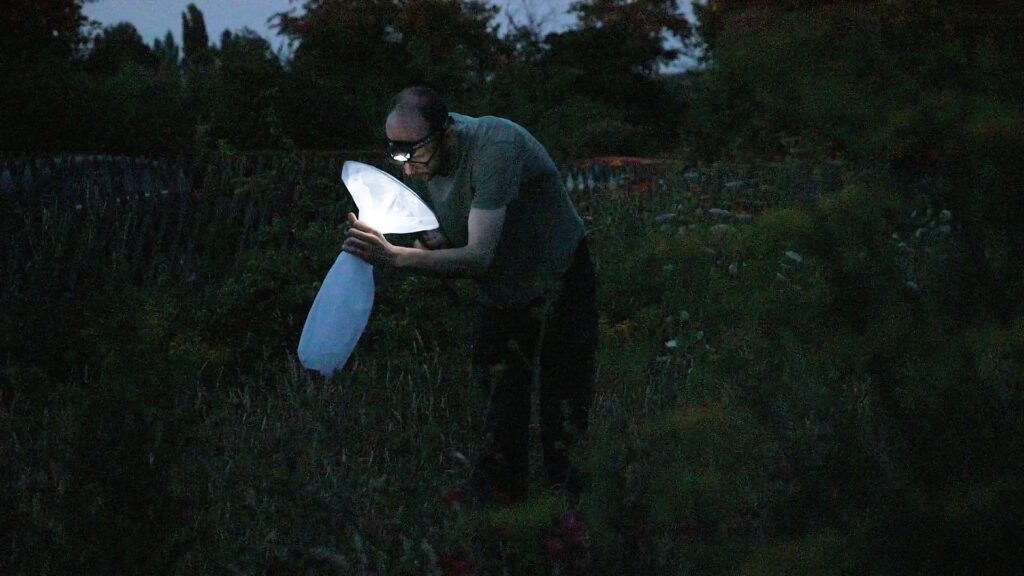
I think Amy was feeling a bit sorry for me. I’d been heading into the garden each evening with a headtorch and a butterfly net in search of elephant hawk moths.
But despite my best efforts, they had given me the slip.
Around this time last year, someone in the next village along showed me a photo of one on their phone. They really are spectacular, with their furry, tan-coloured body and bright pink markings. The thought of them flying around our garden at night really excites me.
But our small village is surrounded by ecologically simplified fields of intensively farmed cereal crops.
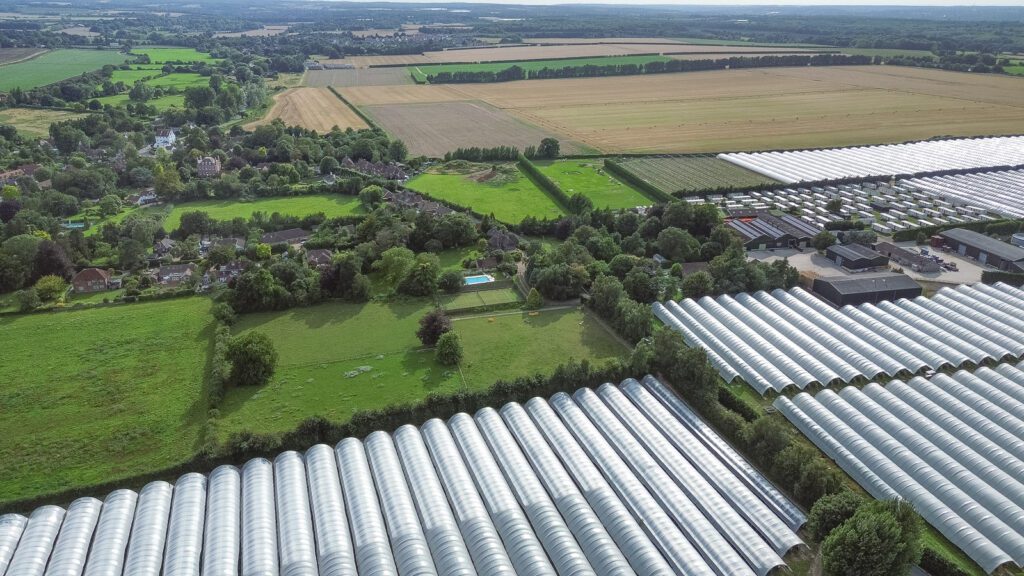
The hawk moths may be happy down the road, but can they cross this ecological desert? If not, are there enough homes with well-planted gardens in our tiny village to support them?
“Let’s make a moth trap, Joey. I’ll order everything we need,” Amy told me at the end of June. So she did.
Moth traps are really easy to make
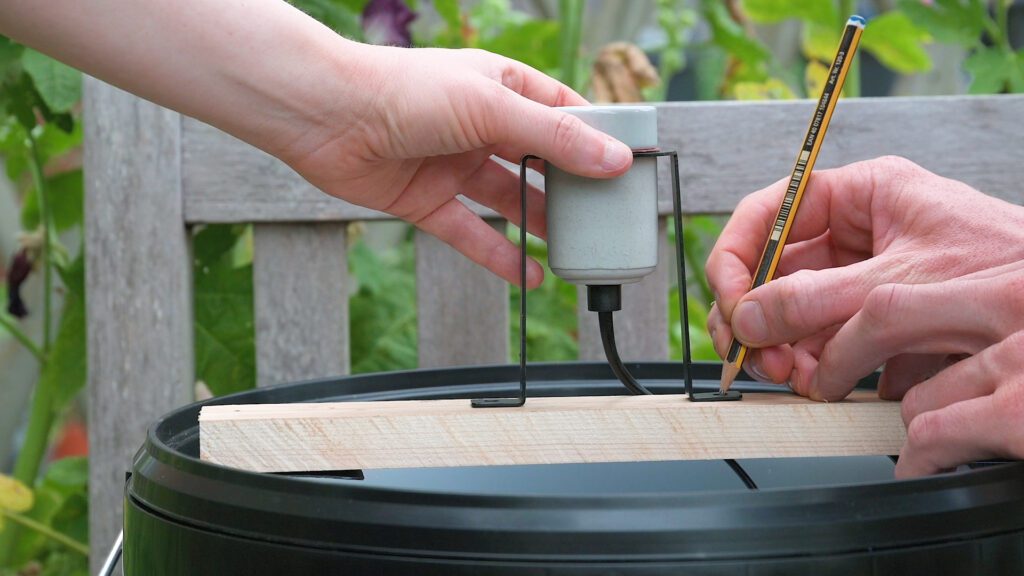
Considering how expensive moth traps are to buy (you can easily pay over £200.00), making one is actually very straightforward. Amy found excellent instructions from Butterfly Conservation, which we followed to the letter.
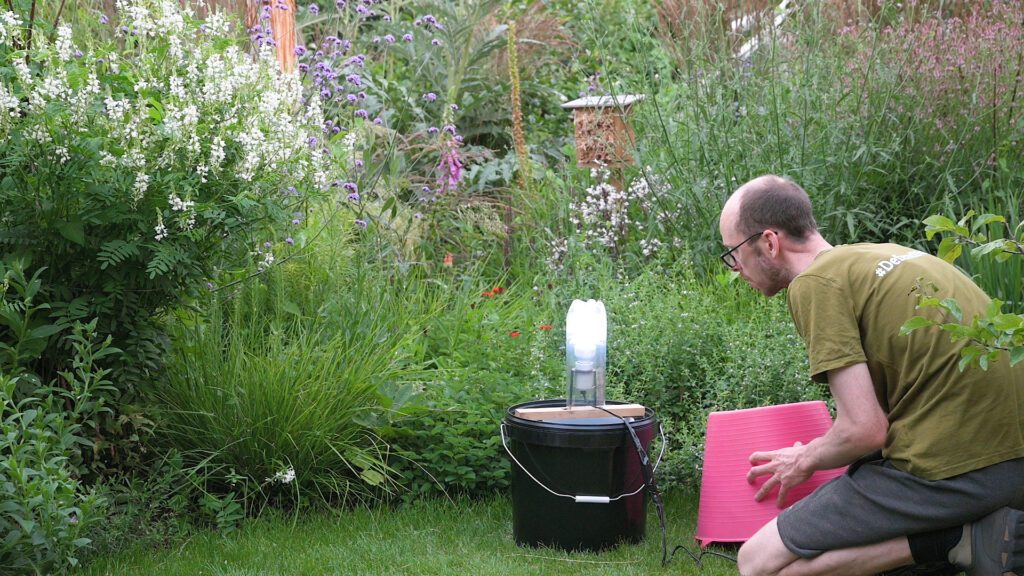
A moth trap is essentially a big bucket with an equally massive funnel on top and a light bulb above both (bulbs that emit UVB are considered best). So despite neither of us being especially DIY savvy, we were able to cobble something together.
I’ll make a video on how to build your own moth trap very soon.
Setting out the moth trap, but not feeling especially hopeful
I have to say, Amy never had any doubts that our homemade moth trap would work well. I, on the other hand, wasn’t so sure.
I couldn’t get my head around how the moths would end up in the bucket below. Surely they would just fly into the bulb repeatedly all night long until they ran out of energy or knocked themselves unconscious (can moths get concussed?). But as the sun was setting, we placed the trap on the lawn next to the naturalistic border and headed in for the night.
Despite the light drizzle, a few hours later, we noticed lots of flying insects darting for the bulb. This was promising, but still, I didn’t want to get my hopes up.
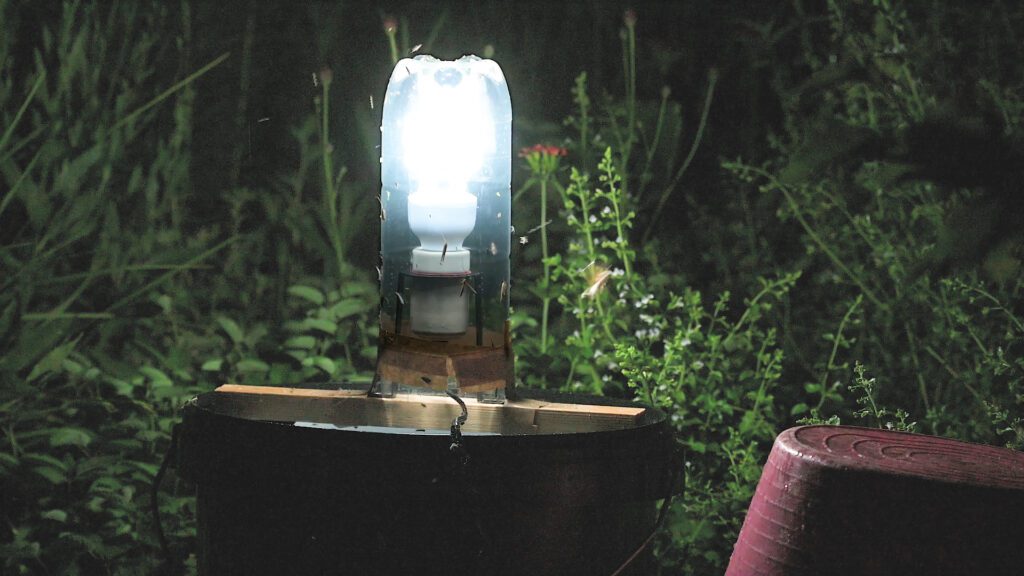
Yet the following morning… moths galore!
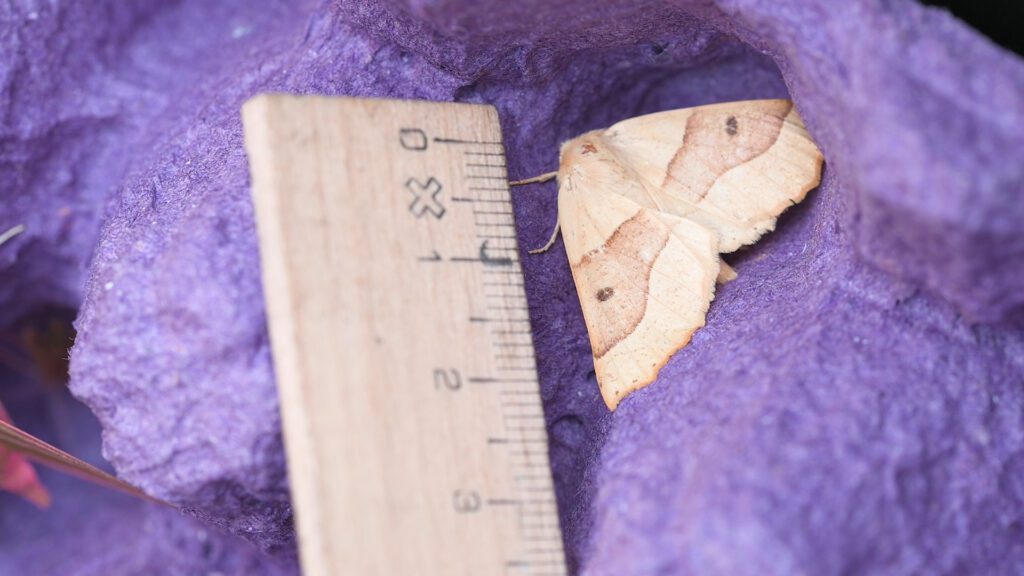
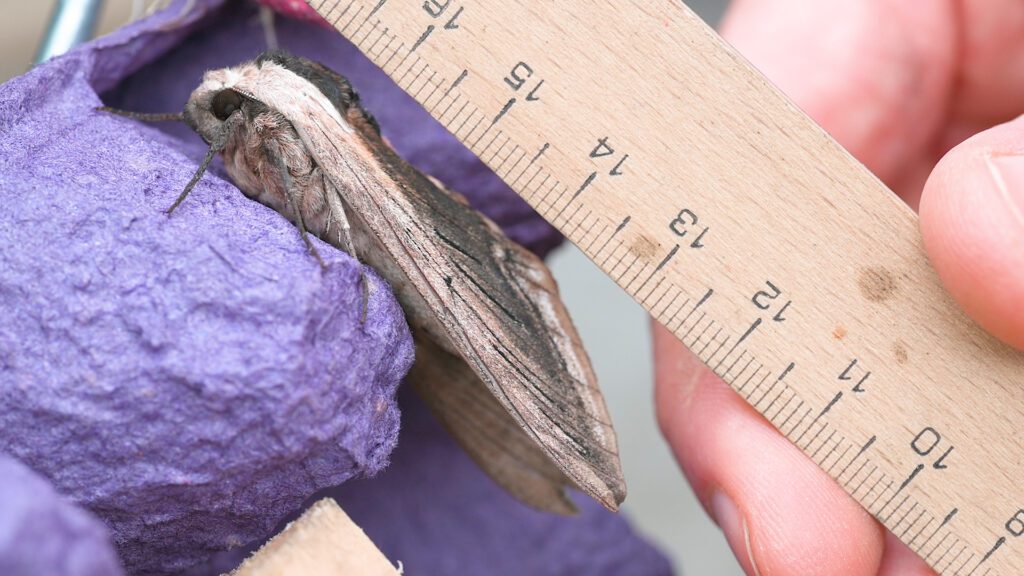
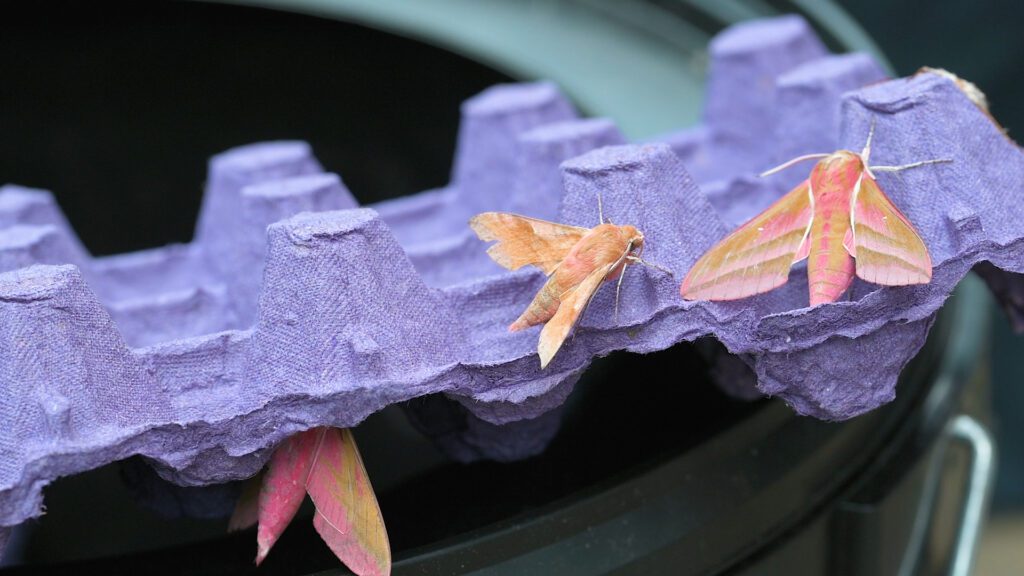
Upon opening the moth trap the following morning to inspect our “catch”, I felt genuine relief. The blue egg boxes we’d used as landing spots for the moths were well populated with a great range of moths of all sizes.
This was the part Amy was most apprehensive about. Not keen on the idea of moths flying at her, she stood back as I carefully removed each cardboard egg tray.
But her nervousness was short-lived. The moths were fast asleep, seemingly oblivious to our presence or the daylight. These vulnerable, beautiful, immobile beings were reliant on us for safety and it was our responsibility to protect them from predation whilst they were in our care.
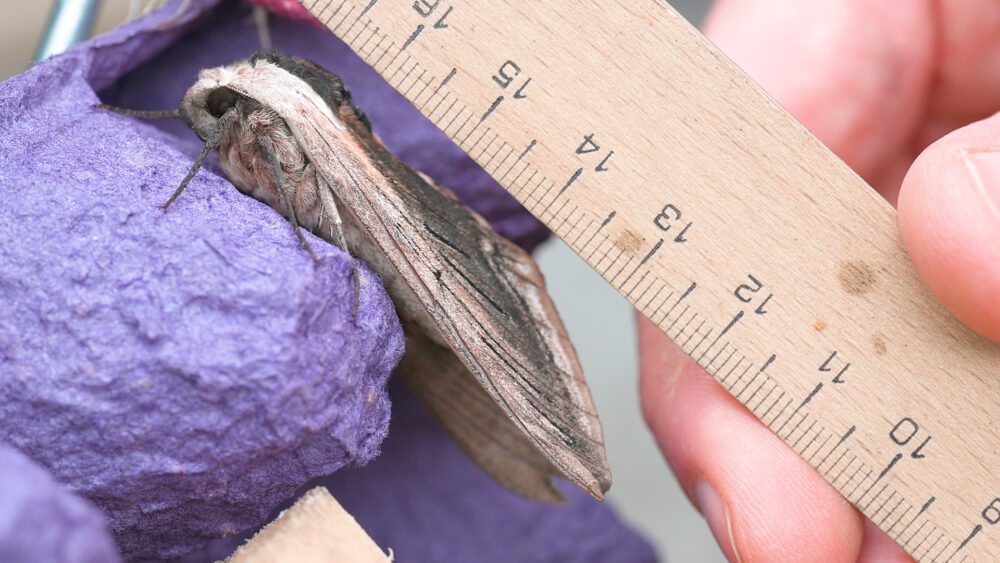
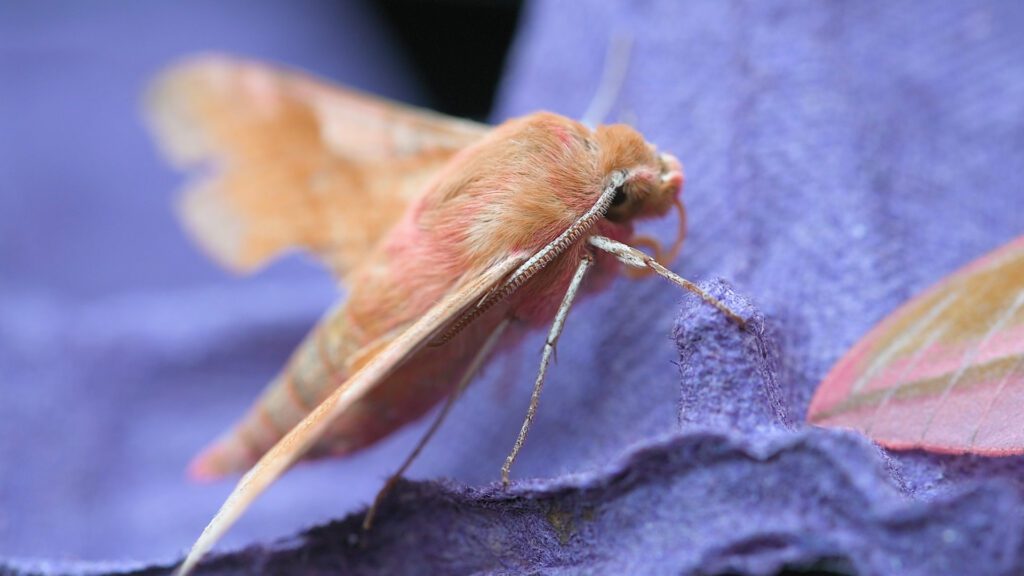
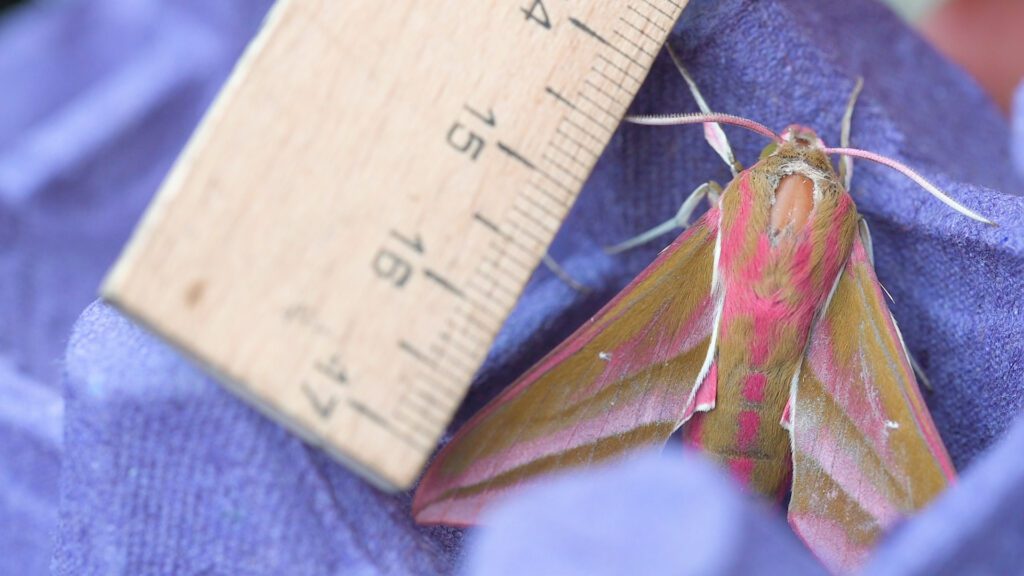
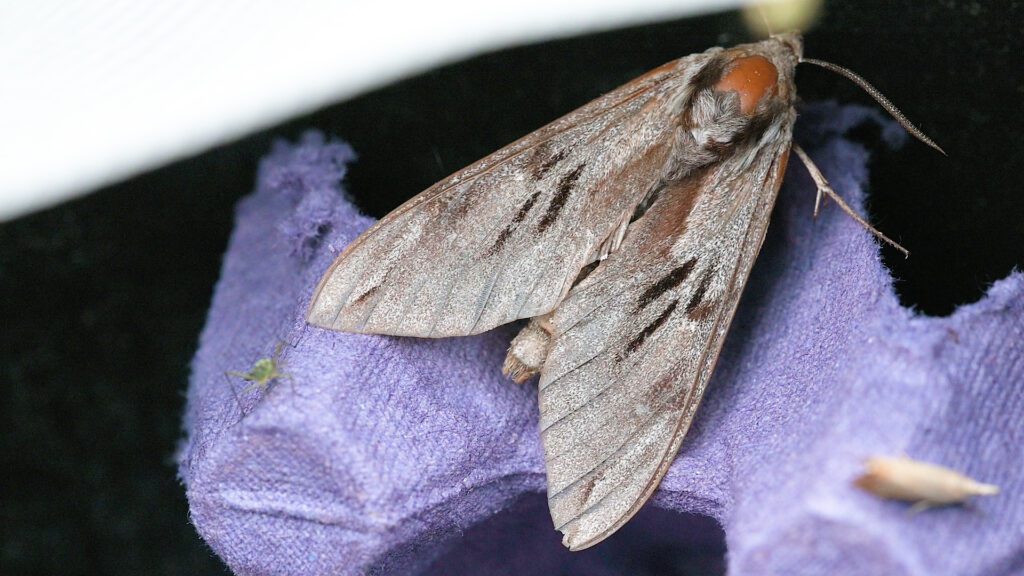
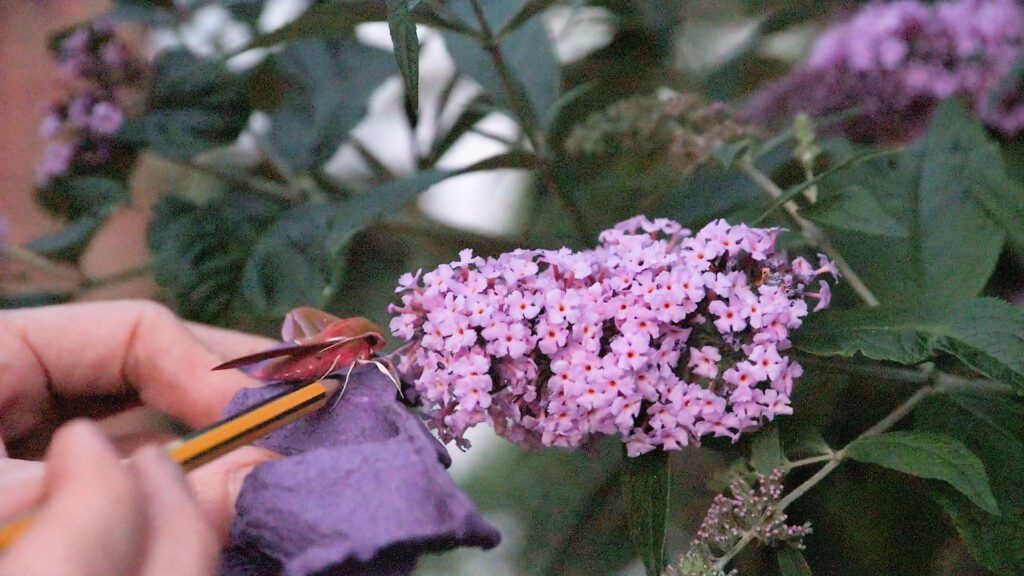
Among the catch were 10 elephant hawk moths, 2 small elephant hawk moths, a scalloped oak, a privet hawk moth, a pine hawk moth, a European June bug, and lots of other night-flying insects!
Our effort had been well rewarded.
Recording the moths that live in our garden
The reason we trapped all of these amazing insects is to record them. Recording which wildlife species are enjoying your garden is really valuable. It helps you to:
- Understand which species live in your garden
- Monitor changes in biodiversity over time
- Measure the impact of your wildlife-friendly gardening practices
- Identify rare or notable species
- Contribute valuable records to local and national conservation projects
- Help scientists understand species distributions and population trends
- Learn more about the ecology of your own garden
- Develop your observation and identification skills
- Gain a deeper appreciation for the wildlife that shares your garden
Although we are not moth experts (Lepidopterist is apparently the term for those who are), our wildlife recordings are extremely valuable to specialist conservation groups.
We struggle to identify which species are which without our smartphones, although we’re getting better. But thankfully, the records that we make using the “iRecord App” are verified or adjusted by local experts, so it doesn’t matter if our identification is wrong. Plus the app will make a species suggestion based on your photos.
So if you’d like to start recording wildlife in your garden, don’t let inexperience be a worry. We’re all learning.
Releasing the moths the following evening
We read contrasting opinions on how and when to release the moths once they were recorded. Some said to place the moth-laden trap somewhere cool in the daytime, and release them at dusk, while others suggested releasing them the same morning, just after recording.
And while some articles said to simply open the moth trap and let the moths leave when they were ready, others said to place them on plants that would protect them from predators.
We decided to wait until the evening and place them on well-known “moth-friendly” plants around the garden, although some fluttered out as soon as we opened the trap, which reminded me a little of Pandora’s Box.
When will we trap again?
Even though recording our native wildlife is important, and I know we’ll be releasing them a few hours later, I feel bad about catching them. The moths would much rather carry on their lives without being trapped.
For this reason, we don’t want to set up the moth trap more often than needed. We definitely don’t want to risk catching the same individuals more than once. So we’re currently thinking that we’ll trap and record moths in our garden about once a month. This feels manageable for us and should mean we can build a year-round record of the night-flying moth species we share our garden with, whilst eliminating the “re-catching issue”.
What wildlife have you spotted in your garden recently?
I’m really interested to hear which wildlife species you’ve found sharing your garden.
And have you noticed bumper numbers of butterflies this year, or is it my imagination?
If you could leave a comment below, I’d be really grateful.
Thanks, and happy naturing 🦋
Joe


