
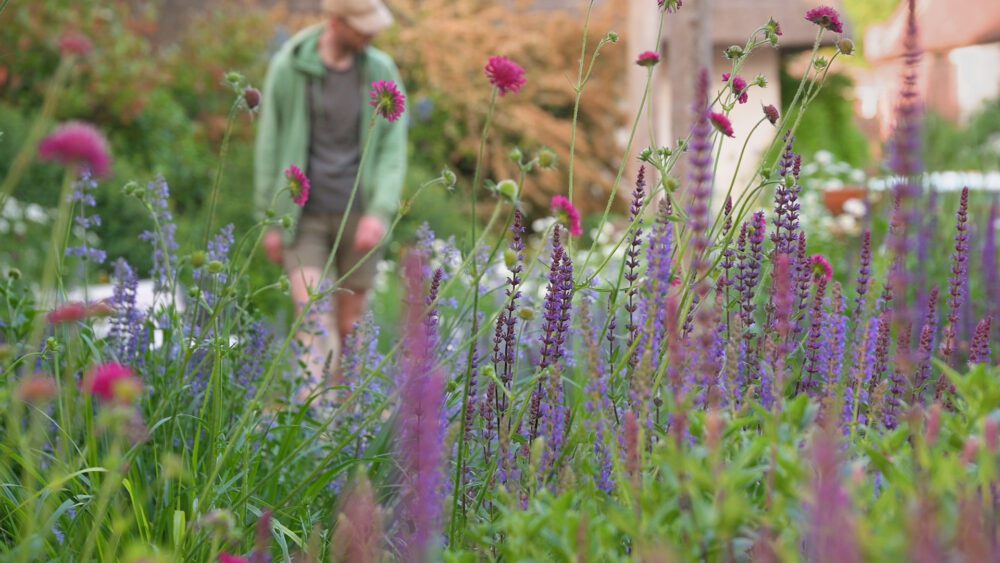
When we talk about wildlife gardening, it’s easy to jump straight to bee hotels, ponds, log piles and little habitat features.
All useful.
But the real foundation of a wildlife friendly garden is plants.
Plants capture the sun’s energy and pass it through the garden as nectar, pollen, leaves, stems, seeds and shelter. Get the planting right, and you give insects, birds and other wildlife far more reason to turn up and stay.
Watch the video and read on for more details:
In this video, I’m looking at some of my favourite wildlife friendly plants, including Salvia nemorosa ‘Caradonna’, Nepeta racemosa ‘Walker’s Low’, Knautia macedonica, ox-eye daisies, ornamental grasses, Verbena bonariensis and more.
The important thing is variety.
Different plants support wildlife in different ways and at different times of year. Some provide nectar for bees and butterflies. Some feed caterpillars or sap-sucking insects. Some offer seeds for birds. Others give shelter through winter, especially grasses and seedheads left standing until spring.
It’s also worth remembering that wildlife friendly planting doesn’t have to mean only native plants. Native wildflowers are extremely valuable, especially in meadow areas, but many non-native garden plants can help extend the flowering season and fill useful gaps.
So rather than looking for one perfect plant, aim for a generous mix.
Choose plants that flower across the seasons. Include trees, shrubs, perennials, grasses and wildflowers. Let some areas be a little less tidy. Watch what turns up.
Because when we grow the right plants, the garden starts to behave less like a collection of separate things and more like a living system.
Which, really, is the point.
Which wildlife friendly plants have I missed?
You’ve seen some of my favourite wildlife friendly plants, but which ones have I missed? I’d love to hear about the plants that wildlife keeps coming back to in your garden, whether they’re visited by bees, butterflies, birds or something else entirely.
Please leave a comment below, and let’s share a few ideas. You might just help another gardener discover their next favourite plant.


